
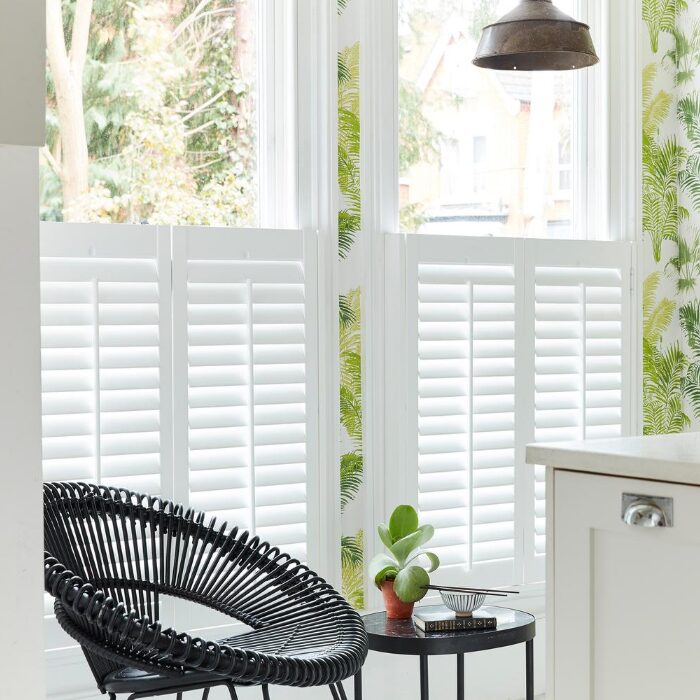
If you have ever compared off-the-shelf blinds with made-to-measure shutters, you will already know the price gap can be noticeable. So how much do custom shutters cost? In most homes, the answer depends less on a single fixed price and more on the size of your windows, the material you choose, the panel configuration and the level of fitting precision involved.
For homeowners in Surrey, West London and South London, custom shutters are usually a longer-term investment rather than a quick decorative purchase. They change how a room looks and feels, improve privacy, manage light more elegantly than many alternatives and, when properly measured and installed, give a far more finished result than ready-made options.
How much do custom shutters cost in the UK?
As a realistic guide, custom shutters in the UK often start from a few hundred pounds per window for smaller, simpler installations and can rise into the high hundreds or more for larger bays, shaped windows or premium hardwood designs. Many full-house projects run into the low thousands, particularly where multiple rooms are being fitted at once.
That broad range is exactly why headline prices can be misleading. A compact bathroom window fitted with waterproof shutters is not priced in the same way as a wide living room bay with full height panels and hidden tilt. Two customers can both ask how much do custom shutters cost and receive very different answers, both entirely reasonable.
The better question is what you are paying for. With bespoke shutters, cost reflects product quality, made-to-measure manufacturing, expert surveying, tailored advice and professional installation. Those details matter because shutters only look effortless when the measuring and fitting are precise.
What affects the price most?
Window size and shape
Size is one of the biggest cost drivers. Larger windows need more material, larger panels and more labour during installation. Bay windows, tracked doors and unusually tall openings also increase complexity, which naturally affects the final figure.
Shape matters too. Standard rectangular windows are generally more straightforward to manufacture than arches, circles or angled gable windows. Special shapes can look exceptional in shutters, but they require more bespoke craftsmanship.
Material choice
The material you choose has a direct effect on both price and performance. MDF or engineered wood ranges are often more budget-conscious while still offering a smart painted finish suitable for many rooms. Hardwood options tend to sit at a higher price point, but they are valued for their refined look, lighter weight and premium feel.
Composite and waterproof shutters are another popular choice, especially in kitchens, bathrooms and utility rooms. They are designed to cope better with moisture and regular temperature changes, which makes them a practical investment in busy spaces.
Style of shutter
Cafe style shutters, which cover only the lower portion of the window, often cost less than full height shutters because they use less material. Full height shutters are one of the most popular options because they offer excellent privacy and a clean, architectural look.
Tier-on-tier shutters are usually priced higher because they involve two sets of independently opening panels. They offer superb flexibility for light control, but that extra functionality comes with additional material and hardware.
Tracked shutters for patio doors or wide openings can also sit at the higher end of the scale. They are ideal for larger glazed areas, though the engineering is more involved than a standard window installation.
Finish and design details
A standard painted finish is often the most cost-effective route, but custom colours, stained finishes and design upgrades can increase the price. Larger louvre sizes, hidden tilt rods and specialist frame options may also alter the overall quote.
These details are not just cosmetic. They influence how traditional or contemporary the shutters feel, how much light enters the room and how neatly the finished product integrates with your interior scheme.
Installation requirements
Professional fitting is a major part of the value in custom shutters. Older properties in particular rarely have perfectly square window recesses, and even small irregularities become obvious once shutters are installed.
A proper survey allows for those quirks before manufacturing begins. That reduces the risk of gaps, rubbing panels or an uneven finish. Installation costs therefore reflect not only labour on the day, but also the technical accuracy that makes the final result look right.
Why bespoke shutters cost more than ready-made options
At first glance, made-to-measure shutters can seem expensive compared with blinds bought online. The difference is that shutters are not simply a product dropped into a basket and delivered in standard sizes. They are tailored to the exact dimensions and conditions of your windows, then fitted to work properly over time.
That tailored process includes consultation, measuring, manufacturing and installation. It also includes guidance on the right material for each room. For example, a bathroom may need waterproof composite shutters, while a principal bedroom may benefit from a warmer, more furniture-like hardwood finish.
When homeowners are choosing between lower upfront cost and longer-term value, shutters often appeal because they combine visual impact with durability. They become part of the room rather than a temporary covering that may need replacing after a few years.
Room-by-room cost expectations
In living rooms and front bays, prices are often higher because the windows are larger and more visually prominent. Homeowners typically choose full height or tier-on-tier shutters here, sometimes with upgraded styling details to complement the room.
Bedrooms vary. A straightforward casement window may be relatively modest in cost, while a large bay or a combination of windows can raise the total. Some customers also choose shutters alongside blackout blinds for stronger light control, which affects the wider window treatment budget even if the shutter quote itself remains separate.
Bathrooms and kitchens can be more cost-efficient if the windows are smaller, although moisture-resistant materials may be advisable. That can shift the price slightly, but the trade-off is better long-term performance.
For whole-house projects, the price per window may become more efficient than ordering one or two windows at a time. It can also create a more cohesive finish throughout the property, which many homeowners value just as much as the practical benefits.
How to compare quotes properly
If you are collecting quotations, avoid comparing figures in isolation. A lower quote is not necessarily better value if it excludes measuring, fitting or a higher-grade frame and louvre specification. Equally, a more expensive quote may reflect better materials, more accurate surveying and a cleaner installation process.
Ask what is included. Is the service fully measured and fitted? What material is being quoted? Are the shutters suitable for humid rooms? Is the finish standard or customised? These questions will usually reveal why one price differs from another.
It is also worth paying attention to how advice is given. A dependable shutter company will explain the practical differences between ranges instead of pushing the most expensive option. Good guidance tends to save money in the long run because it helps you choose the right solution first time.
When custom shutters are worth the investment
Custom shutters tend to make the strongest case where homeowners want a polished, permanent look. They are especially worthwhile in bays, street-facing rooms, family homes that need reliable privacy and properties where off-the-shelf blinds never quite sit properly.
They also suit customers who want the buying process to feel straightforward. Having one team manage design advice, measuring and fitting removes much of the uncertainty. That is a large part of the appeal for clients who value convenience as much as appearance.
At Sunshades Shutters, that end-to-end approach is often what gives customers confidence to move forward. The result is not just a better-fitting product, but a smoother experience from first appointment to final installation.
So, how much should you budget?
A sensible budget depends on whether you are fitting a single room or planning a wider home improvement project. For one or two standard windows, you may be looking at a few hundred pounds per window. For larger bays, premium materials or multiple rooms, the budget naturally climbs.
The most useful way to think about cost is in relation to outcome. Bespoke shutters are part design feature, part practical upgrade. They improve privacy, shape natural light, bring order to awkward windows and add a tailored finish that cheaper alternatives often struggle to match.
If you are weighing up the investment, start with the rooms where shutters will make the biggest difference day to day. That usually gives you the clearest sense of value, and it helps turn a price question into a decision that feels worthwhile.