
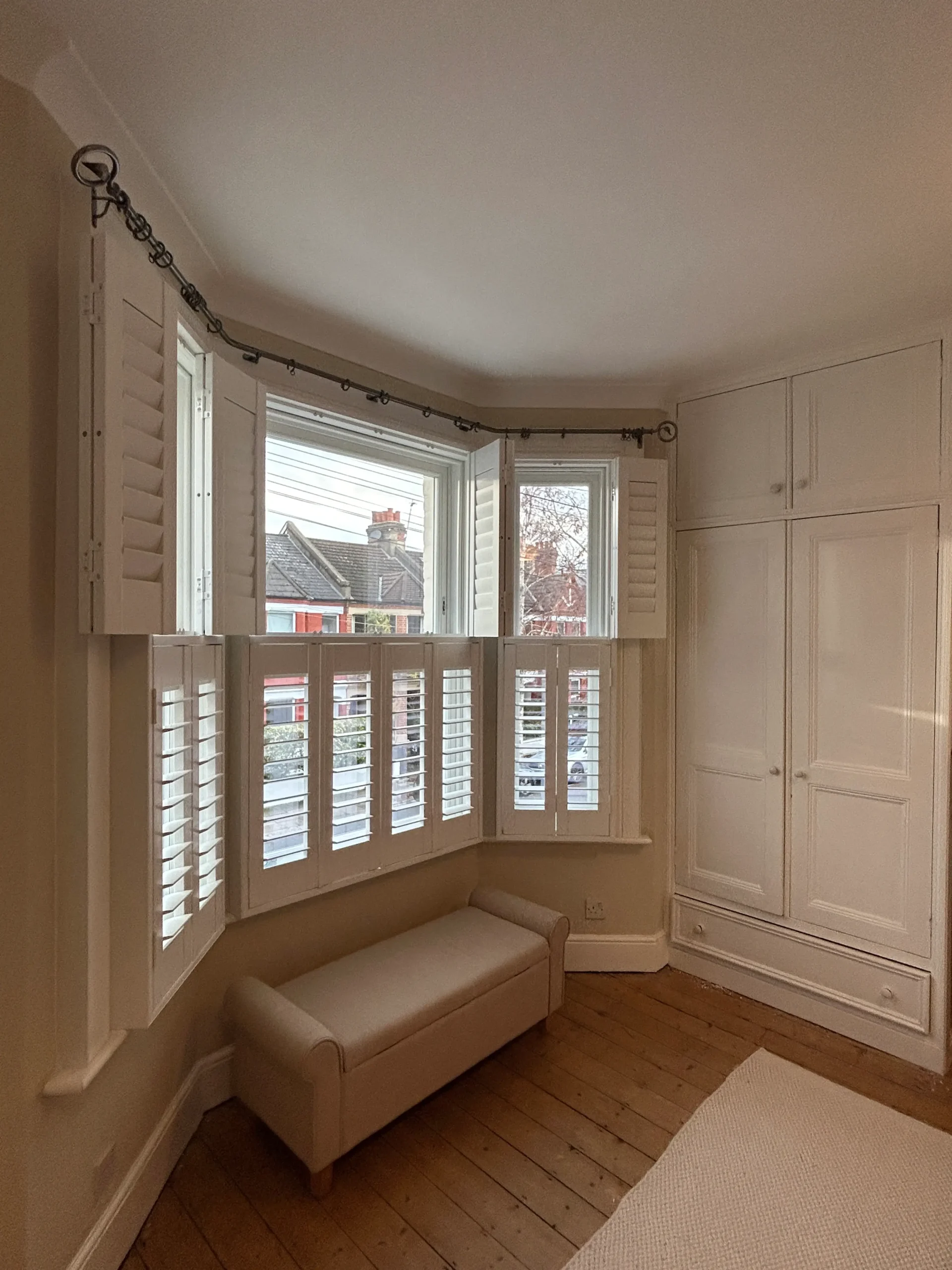
A beautiful shutter should do more than look the part. When clients ask us about hardwood shutters vs composite shutters, they are usually trying to balance three things at once – appearance, practicality and long-term value. The right choice depends on where the shutters are going, how the room is used and the finish you want your home to achieve.
Both materials can deliver a tailored, high-end result when they are made to measure and fitted properly. The difference is in how they perform over time, particularly in busy family homes, damp spaces and rooms where design detail matters just as much as durability.
Hardwood shutters vs composite shutters: what is the difference?
Hardwood shutters are crafted from natural timber, which gives them a distinctive grain, a refined painted finish and a lighter overall weight. They are often chosen for living rooms, bedrooms and bay windows where elegance and detail are front and centre.
Composite shutters are engineered from a durable man-made material designed to cope well with moisture, temperature changes and day-to-day wear. They are especially popular in bathrooms, kitchens and utility rooms where practicality tends to lead the decision.
At a glance, the two can look surprisingly similar, particularly when both are professionally finished in classic whites or soft neutral tones. The real difference becomes clearer when you consider texture, weight, room conditions and budget.
Appearance and finish
For many homeowners, this is where hardwood takes the lead. Timber has a natural character that brings warmth and depth to a room, even when painted. The finish tends to feel slightly more furniture-like, which suits period properties, decorative interiors and spaces where every detail has been carefully considered.
Hardwood also allows for fine styling. Because it is strong yet relatively lightweight, it can be used for larger panels and elegant louvre profiles without looking bulky. If you want shutters to feel like an integrated part of the architecture rather than simply a practical window covering, hardwood is often the more polished choice.
Composite shutters still offer a smart, clean appearance. In contemporary homes, that smooth uniform look can work very well, especially in crisp white schemes or family spaces where a neat finish matters more than natural material detail. They may not have the same subtle grain and character as timber, but they do provide a tidy, consistent result that suits many interiors perfectly.
Which material suits premium interiors best?
If the room is design-led and the shutters are intended to elevate the overall look, hardwood usually feels more luxurious. In formal lounges, master bedrooms and front-facing bay windows, that extra refinement is often worth it.
If the priority is a fresh, practical finish in a hardworking room, composite can still look excellent. The key is accurate measuring, careful manufacturing and a professional fit so the shutters feel bespoke rather than purely functional.
Durability in everyday use
Durability means different things in different rooms. In a sitting room, durability might mean keeping its finish and shape over many years. In a bathroom, it means coping with steam, splashes and changes in temperature without warping or swelling.
Hardwood is durable when used in the right setting. It performs very well in dry interior spaces and stands up beautifully to everyday opening and closing. Because it is lighter than many engineered alternatives, it can also be easier to operate on larger windows.
Composite comes into its own where moisture is an issue. It is specifically valued for its resistance to damp conditions, making it a dependable option for kitchens, bathrooms and laundry areas. If your windows regularly deal with condensation, composite shutters offer reassurance that the material is built for that environment.
This is one of the clearest examples of why the best choice is not always the same throughout the house. Many homeowners choose hardwood in living areas and bedrooms, then switch to composite in rooms where water and humidity are part of daily life.
Hardwood shutters vs composite shutters for bathrooms and kitchens
For bathrooms and kitchens, composite shutters are often the more sensible option. These rooms create a level of moisture exposure that can challenge natural materials over time, particularly if ventilation is limited or the windows are used heavily.
Composite shutters are designed to cope with exactly that sort of condition. They are easy to wipe down, resistant to everyday splashes and well suited to spaces where convenience matters. In family kitchens, they also handle knocks and fingerprints well, which is not a small consideration.
That said, hardwood can still be used in kitchens depending on the position of the window and the overall room environment. A well-ventilated kitchen with a window away from the hob and sink may still be suitable for timber, particularly if visual continuity with adjoining living spaces is important. Bathrooms are usually where composite has the stronger practical advantage.
Weight and window size
Weight affects both appearance and operation. Hardwood is generally lighter than composite, which can make a real difference on larger installations, wide bays and full-height designs. Lighter panels often mean smoother day-to-day use and more flexibility in design.
Composite tends to be heavier, and while that is not a problem in many standard window sizes, it can influence the ideal panel configuration. This is one reason bespoke measuring matters so much. A good shutter design does not just consider what looks best on paper. It takes into account panel width, hinge placement and how the shutters will feel to use every day.
In practice, both materials can work very well, but larger or more complex windows often favour hardwood because of that lighter construction.
Cost and long-term value
Composite shutters are usually the more budget-friendly option. For homeowners looking to achieve the shutter look across several rooms without stretching the budget too far, they can offer excellent value.
Hardwood shutters typically sit at a higher price point, reflecting the material itself and the more premium finish. For many clients, the extra investment is justified by the visual quality, lighter feel and suitability for statement rooms.
Value should be judged by where the shutters are being installed. Paying more for hardwood in a formal lounge may make perfect sense because that is where the design impact is strongest. Choosing composite in a bathroom may be the better investment because it is better suited to the environment. The smartest choice is often not one material over the other, but the right material in the right place.
Is composite always the cheaper choice?
Usually, yes, but not every comparison is like-for-like. The final cost can vary depending on window size, panel layout, louvre size, colour choice and installation requirements. What matters most is understanding what you are paying for – not just the product, but the fit, finish and performance over time.
Maintenance and day-to-day care
Both hardwood and composite shutters are relatively straightforward to maintain. Regular dusting and the occasional wipe with a soft cloth will keep them looking smart.
Composite has the advantage in busy households where easy cleaning is high on the list. Its moisture resistance also makes it less demanding in rooms where steam or splashes are common.
Hardwood is not high maintenance, but it does benefit from being treated as a premium interior finish. In the right rooms, that is hardly a drawback. It simply means timber is best appreciated where its beauty can be enjoyed without being asked to deal with constant humidity.
Which shutter material is right for your home?
If you want the most refined finish for living areas, bedrooms or bay windows, hardwood is often the standout choice. It brings natural elegance, lighter panels and a more elevated look that works beautifully in well-designed interiors.
If you need a practical, dependable option for bathrooms, kitchens or utility spaces, composite is usually the better fit. It offers resilience, easy maintenance and peace of mind in rooms where moisture resistance matters most.
Many homes benefit from both. That is often the most thoughtful approach, especially when you want consistency in style without compromising on suitability from room to room. At Sunshades Shutters, this is where tailored advice makes all the difference. A made-to-measure service should not push a single answer. It should help you choose the finish that works best for each space, each window and the way you actually live.
The right shutters should feel effortless once they are in place – beautiful to look at, easy to use and entirely right for the room they are in.